BetaRealities Logo
Entry Animation Logo
Wilhelm Innovation House
Can we design affordable housing through material innovation?
The Wilhelm Innovation House combines new standards in simple building with innovative timber construction. The flexible design creates social terraces, affordable housing and a sustainable daycare that adapts over time.
Beta Realities designs the new innovation building in Hamburg Wilhelmsburger Hafen. Building plot 19-South acts as a "hinge and terminating point": bordered on three sides by parkland, it forms the spatial counterpart to the northern axis and completes the sequence of courtyard and block structures. The urban design gesture is deliberately balanced: a stepped volume that recedes towards the park and adopts the edge towards the northeastern neighboring buildings. This creates a termination that neither dominates nor fades into the background—it conveys scale, visual connections, and a legible identity. This confident yet context-sensitive approach corresponds to the design guidelines' requirement for small-scale textures and differentiated building forms.
WHB_Night
Project Region
Europe
Project Period
2025
Location
Hamburg, Germany
Team
Paul Clemens Bart, Marvin Bratke, Andrei Dan Musetescu, Alisa von Postel, Klemens Sitzmann
Status
Concept Design
Programme
Living, Education
Client
PARCBAU GmbH
Collaborators
fabulism, noku, Sitzmann Studio
Size
3.750 m²
Visualisation
The Big Picture
Urban Continuity.
The ground-floor facade opens to the Kita playground, creating a seamless connection between inside and outside. Transparent, welcoming entrances and half-public zones integrate the building with its park context, establishing continuity between the neighborhood and communal spaces while enhancing interaction and visibility for all users.
WHB_Kita
WHB_Concept_Diagrams
A Modular Design Approach.
The design emerges from a clear six-step strategy: defining an efficient base module, splitting it for modular construction, removing corner volumes for terraces and views, creating stepped roofs, integrating community rooftop areas, and embedding greenery into the facade—balancing efficiency, flexibility, and spatial quality.

WHB_North
A Living Facade.
Integrated greenery softens the building’s mass and strengthens its connection to the park. Balconies, terraces, and planted facades create layered vertical gardens, promoting biodiversity, visual richness, and a sustainable, human-centered environment that merges architecture with nature.
Symplicity in Modularity.
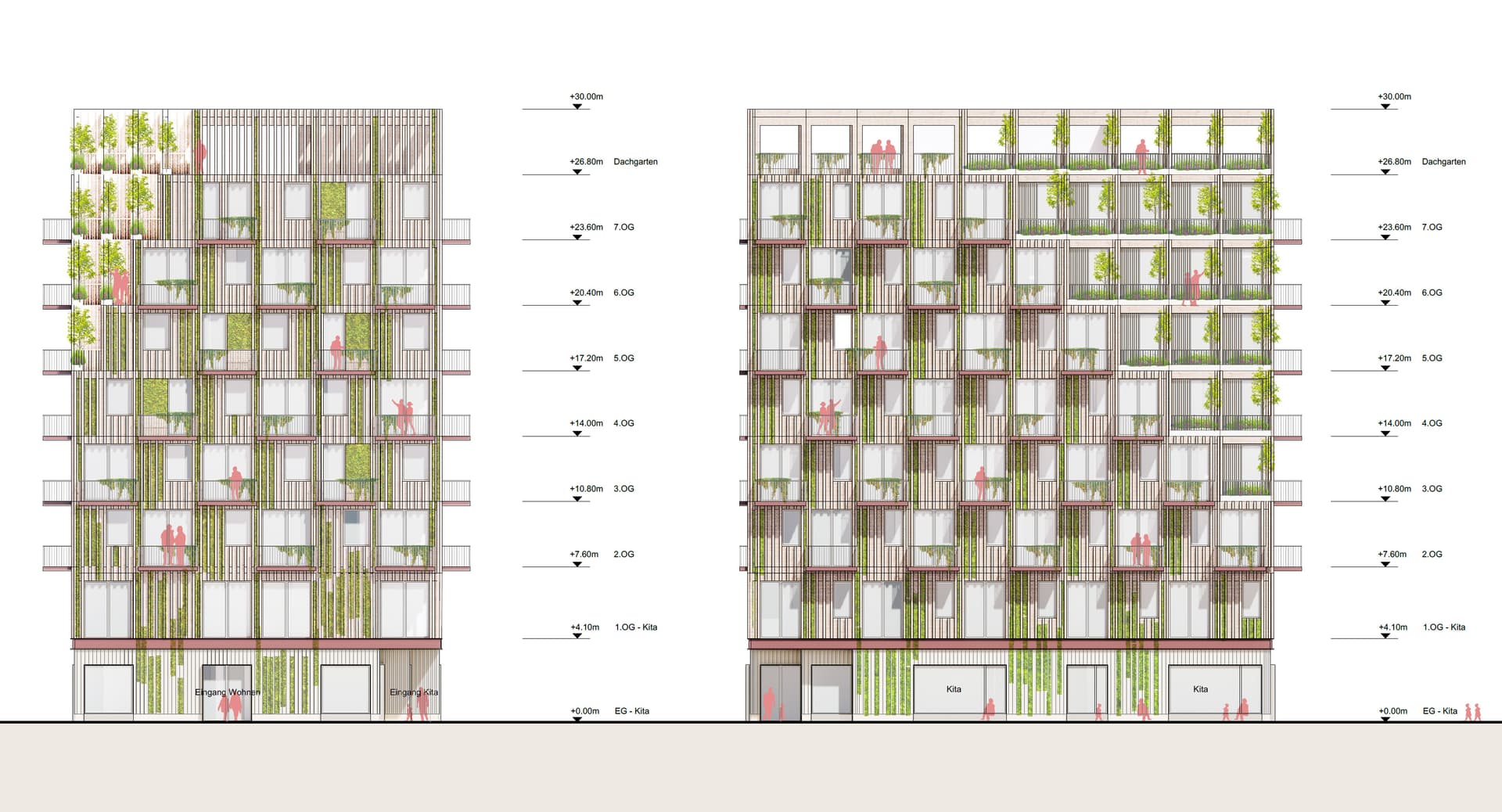
Elevations reveal the modular composition: clear, repeatable volumes define structure and rhythm. Facade grids articulate balconies, loggias, and material transitions, supporting flexibility, efficient prefabrication, and a legible visual hierarchy that balances small-scale texture with urban presence.
WHB_Elevations
WHB_Siteplan
Elevated Communal Living.
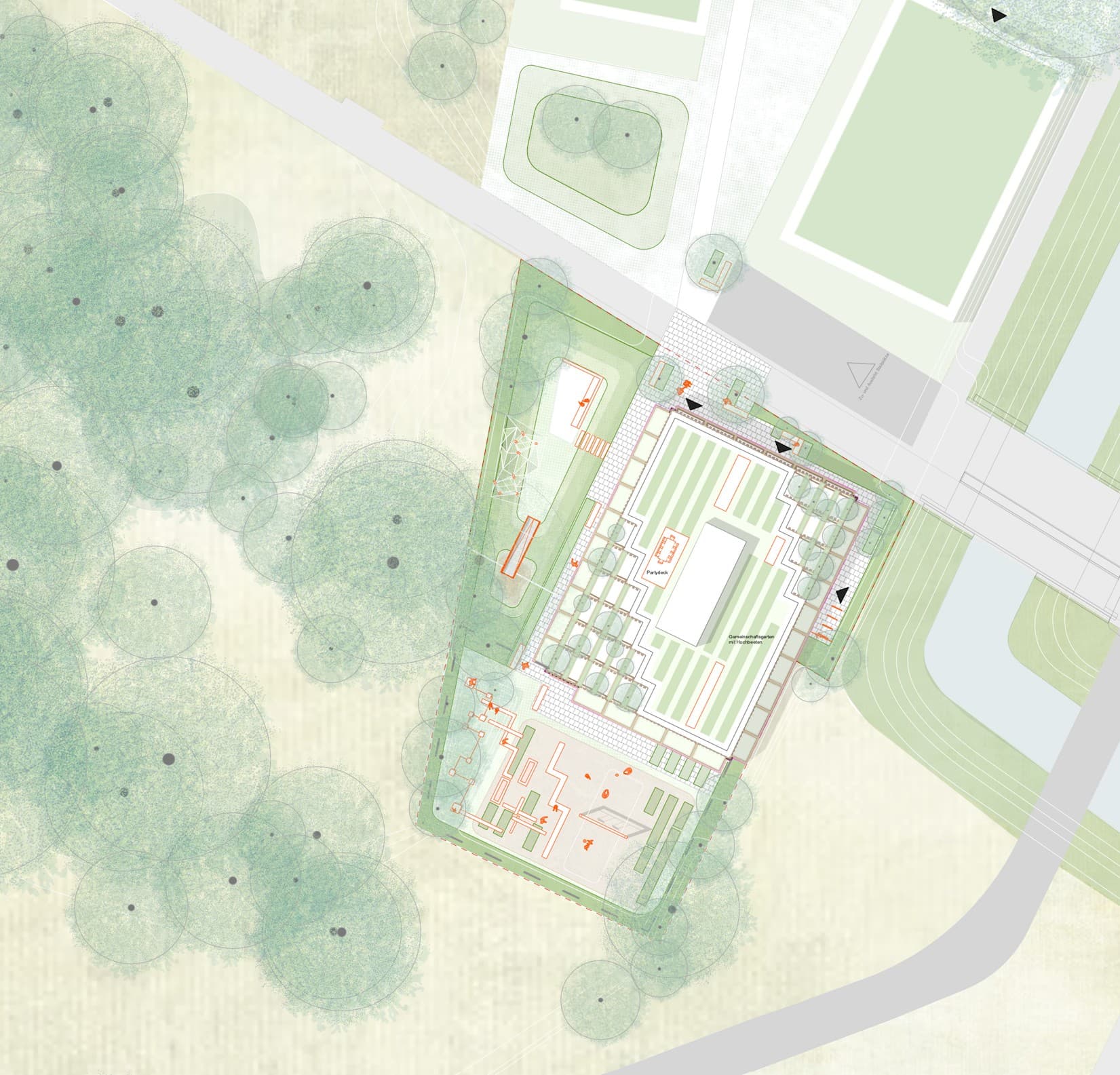
Community roof gardens, photovoltaic areas, and visual connections across the block foster social interaction, creating a layered network of shared spaces that unite residents while complementing the park and surrounding courtyard structures.
A Spatial Hierarchy.
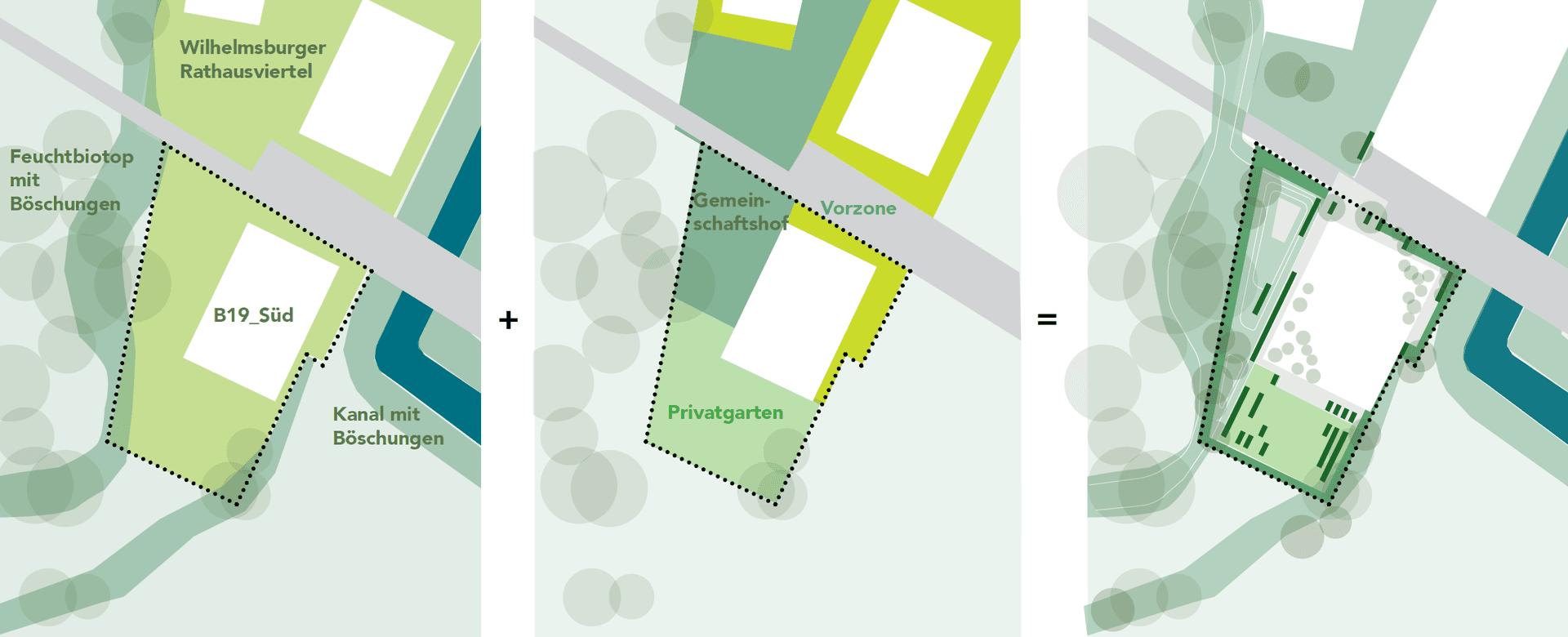
From intimate gardens to interactive courtyards and shared rooftops, the arrangement of private, semi-public, and communal areas encourages social interaction, safety, and accessibility, offering a flexible spatial framework that supports community life without compromising individual privacy.
WHB_Green_Strategy